I should tell you right now that this is a guide for people who are just going to use the 1-10, -, and = buttons as key-bindings, with the rest being placed on extra bars. If you want a guide on using the letters on your keyboard to use your abilities, look elsewhere.
Like many of my advice posts, the topic covered in this post will be a no-brainer to experienced players, but new ones will find it informative, I hope. I often notice that when people try WoW on my computer, they often put their abilities on the action bar in the order they get them in. While this is alright, it is hardly an effective way of doing things. Thus I decided to write up some guidelines on effective placement of abilities.
For starters, you will probably want to have more than twelve abilities available to you at any given time, and you won't want to keep them on a separate toolbar, which will force you to cycle through them. Instead, add some more via the options menu.
Game Menu (escape key) -> Interface -> Action Bars
This moves those extra action bars onto the screen so that you can use them without needing to cycle through them. You will want to put abilities here that you don't use frequently, meaning situational abilities and emergency abilities with long cooldowns, as well as any abilities that are mostly used out of combat. I put these abilities in order form left to right based on how frequently I use them, although I keep the emergency abilities that could save my life close to the left, even if I rarely use them, so that I can have easy access to them.
However, you will want to put the abilities you use frequently on the action bar itself. If you use the WASD keys to move, you can only reasonably expect to be able hit the number keys 1 through 6 with your left hand.* Anything beyond that, you will probably need to click to use. As such, put your six most important abilities here. These include the abilities you use most frequently, as well as any emergency abilities that you need to keep within a keystroke. As a tank, I keep Growl and Feral charge - bear on keys 1 and 2, respectively, so that I can press them at any time when I need to. Note that this only really applies to tanks and healers; if you are a DPS'er or are solo-ing, you probably won't have any emergency abilities that you will need to use with any level of frequency. As a rule of thumb, any abilities with cooldowns longer than thirty seconds, you will probably want to put on the additional action bars. Putting it on the main bar is just a waste of space.
Once you have your emergency keys bound (if you do bind them), you should order your remaining abilities with a combination of priority and frequency of use. As a tank, I usually use Lacerate the most, followed by Mangle (bear), Swipe, and Maul. However, after growl and feral charge, I arrange those abilities on my main action bar like so: Mangle, Lacerate, Maul, and Swipe. I put mangle first because it is my highest threat ability, so I try to use it every time it is off of its cooldown. I then put Lacerate because I use it so frequently. Maul comes next because I need to be able to spam it when I use it, so it's needs to be within my reach, but I don't spam it so frequently that it warrants being before the other two abilities. Swipe comes last because I don't use it too frequently and when I do need to spam it, I can usually see the situation coming and can prepare myself by getting ready to click it. Although I used physical necessities as my priorities on my bear form bar, you can also prioritize your abilities by damage or mana efficiency. For example, on my druid, I have my healing abilities organized so that the most mana efficient ones are furthest on the left.
To give another example, on my Shaman, with whom I mostly solo, I place Stormstrike first, then Lava Lash, then Earth Shock, then Flame Shock. I place stormstike first because it is my highest damage ability and I want to use it whenever it is off of its cooldown. Lava Lash, however, is my lowest damage ability, but I put it second because I frequently use it twice in a fight, sometimes three times. Earth shock and flame shock are both high on my priority list, since they both cause more damage than Lava Lash but less than Storm Strike, but I rarely use either more than once in a battle, so I put them after the other two. I usually start a battle by pulling an enemy with Flame Shock, and I usually use Earth Shock in battle, so I put Earth Shock in an easier-to-reach position than Flame Shock. The rest of my abilities on my action bar are all situational, so I put them after my main abilities.
One last note: It's helpful to keep similar abilities together on your action bars. On my shaman, all of my shocks are together, and ditto for my lightning and healing spells. On my druid's cat form bar, all of my abilities that give combo points are together, as are all of my abilities that use them. On my paladin, I keep all of my buffs and all of my seals grouped together. You get the idea. If you are really familiar with your class's abilities, then you may wish to disregard this advice; it's your choice.
*Some people change their movement keys to be ESDF, which opens up more of the keyboard for your use. You can do this if you wish, but remember to remap the R and F functions.
Wednesday, September 2, 2009

Monday, August 31, 2009
Some changes in real life
Well, I have finally made the move to college, and though classes have not yet started, I can tell things are going to be different. I am going to have a lot more time to myself, and how I manage that time will determine whether the blog will be able to continue to exist. Classes start on Wednesday, so Wednesday's advice post should go as planned. However, trying to get Friday's post up will determine whether my new schedule will allow me to continue the blog. In all likelihood, I will be able to continue blogging, since they say you get more free time in college, but only time will tell.
Friday, August 28, 2009
My musings on Cataclysm from a story perspective
For those of you who don't know, the next WoW expansion was announced last weekend during Blizzcon. It is called Cataclysm, and you can read up on the story and new features on Blizzard's official site, linked before. Normally I'm not much of a lore nerd, but the announcement motivated me to do some research on the lore behind it, and I noticed an interesting pattern that has been consistent with all of the expansion packs thus far: each one has featured a main villain who was not inherently evil, but become that way when he was corrupted by someone else. Illidan admired the Burning Legion for the purity that lay under their chaotic behavior, and was thus turned by the satyr Xavius and eventually given his power by Sargeras. The Lich King became evil when Arthas Menethil was corrupted by the demon Kil'jaeden. Deathwing was driven insane by the whispers of the Old Gods. It seems to me as if Blizzard is simply having us face the minions of the faces of true evil in the Warcraft universe. Then again, although players were able to kill Kil'jaeden in Burning Crusade, facing a powerful being like Sargeras or the Old Gods would probably mean the end of us.
What interests me is that way that Blizzard transitioned away from the Burning Legion as our main enemy to our main enemies being the old gods. Although the Burning Crusade did have us facing the Legion for the most part, the main villain of Wrath of the Lich King was himself created by the Burning Legion's magic. Thus the legion's influence has really been the subject of two expansion packs, not just one. The Old Gods have also been a part of our adventures thus far, though not prominently as the Legion. We faced K'thun in vanilla WoW, but the Old Gods didn't make a return until we faced Yogg-Saron in Ulduar. Now we are going to be facing a being corrupted by the Old Gods, Deathwing. If Blizzard continues that pattern they started with Burning Crusade, where we players first reactively kill the immediate threat to our world then proactively kill an even greater, related threat, perhaps we will be facing more Old Gods after we face Deathwing.
Another thing of note is that, thus far, both of the evil forces responsible for the conflicts we players have faced (the Burning Legion and the Old Gods) have been motivated by the desire to return the world to it's original chaotic form. For those of your unfamiliar with the Dungeons and Dragons alignment system, it makes a distinction between good vs. evil and lawful vs. chaotic. The distinction is important, for it shows that those seeking order are not always fighting on the side of good. I bring that up because the fact that WoW's main villains are chaotic, not evil, implies that we players are not fighting the age-old fight of good and evil, but we are simply fighting to preserve the ordered world which we inhabit and which the titans created so long ago. If this is true, then our cause is not so noble as we thought.
The motives of the Old Gods and the legion are more clear than ours, as are the reasons for them. Both wish to return the world to its original chaotic form, as I mentioned. The Old Gods wish to do this because that is the world they ruled. When they were defeated by the titans, their power over the world also vanished. Thus they probably wish to rule the world again. Sources suggest that they are now simply sleeping below the earth while their telepathic whispers drive the creatures above insane. Perhaps by driving the powerful creatures of the world insane, they wish to restore the world to some form of chaos. Even if they can't rule that world, I would imagine it would satisfy them to know that the world has become as they left it. As for the Legion, well, spreading chaos just seems to be what they do.
Back on the previous topic, I see two possible reasons for Blizzard continually using secondary villains as the main antagonists in their expansion packs. One reason is that it allows them to continue the story of Azeroth without needing to create new evil forces. If we players were to simply defeat the Burning Legion and the Old Gods as a whole, there would be no one left for us to fight. Of course, getting rid of the Burning Legion as a whole would probably be more difficult than defeating the Old Gods, but regardless, if we players succeeded in removing the true threats to our world, the only conflicts left would be those within the world itself. Sure, there are still many fights to be fought among the mortal races, but those are really more patch material (e.g. patch 2.3 and Zul'Aman) than expansion material. An expansion really wouldn't feel like a proper expansion unless we have a very powerful entity to fight, and though there is probably enough left for many expansion packs, if Blizzard wants to continue the story of Warcraft, their choice is to either let players kill the true antagonists of the lore of Warcraft and need to create new villains, or to protect the villains and allow their plots to continue.
That's the practical reason for the pattern of casting corrupted heroes as main antagonists, but there could be a hidden meaning in Blizzard's decision. As I mentioned before, Illidan, Arthas, and Deathwing were all more or less good before being corrupted by some other evil force. If we were to analyze WoW as a story, then this sort of corruption would definitely be a motif, the deeper meaning of which would probably be that we can never truly expunge evil from our world. Although there are still villains aplenty for us to fight, perhaps future expansions will see the corruption of prominent figures in the lore who are currently on our side and whom we will be forced to face after they become evil. My bets are on Varian and Garrosh. Their anger makes them prime targets for any sort of corrupting force, and to be honest, I know a lot of players that would be happy to see them go.
Then again, perhaps it is not other characters who will be corrupted, but instead it is us. Sargeras, the creator of the Burning Legion, slowly became corrupted as he fought the demons of the Legion in an effort to maintain order in the universe. As I mentioned before, that's all we are really doing, maintaining order in a world that is threatened with chaos, not maintaining good in a world that is threatened with evil, although it may seem that way. Are we next? Will we become the Old Gods' or the Legion's new minions? I wouldn't discount the possibility. Perhaps we will then go from Alliance vs. Horde to Corrupted vs. Uncorrupted. (I doubt that will happen; if Blizzard were to corrupt the players themselves, it would be a gradual thing that we would all be involved in.)
I would just like to add that I got most of my lore from WoWWiki, so if anything I have said here is wrong or oversimplified, please let me know.
What interests me is that way that Blizzard transitioned away from the Burning Legion as our main enemy to our main enemies being the old gods. Although the Burning Crusade did have us facing the Legion for the most part, the main villain of Wrath of the Lich King was himself created by the Burning Legion's magic. Thus the legion's influence has really been the subject of two expansion packs, not just one. The Old Gods have also been a part of our adventures thus far, though not prominently as the Legion. We faced K'thun in vanilla WoW, but the Old Gods didn't make a return until we faced Yogg-Saron in Ulduar. Now we are going to be facing a being corrupted by the Old Gods, Deathwing. If Blizzard continues that pattern they started with Burning Crusade, where we players first reactively kill the immediate threat to our world then proactively kill an even greater, related threat, perhaps we will be facing more Old Gods after we face Deathwing.
Another thing of note is that, thus far, both of the evil forces responsible for the conflicts we players have faced (the Burning Legion and the Old Gods) have been motivated by the desire to return the world to it's original chaotic form. For those of your unfamiliar with the Dungeons and Dragons alignment system, it makes a distinction between good vs. evil and lawful vs. chaotic. The distinction is important, for it shows that those seeking order are not always fighting on the side of good. I bring that up because the fact that WoW's main villains are chaotic, not evil, implies that we players are not fighting the age-old fight of good and evil, but we are simply fighting to preserve the ordered world which we inhabit and which the titans created so long ago. If this is true, then our cause is not so noble as we thought.
The motives of the Old Gods and the legion are more clear than ours, as are the reasons for them. Both wish to return the world to its original chaotic form, as I mentioned. The Old Gods wish to do this because that is the world they ruled. When they were defeated by the titans, their power over the world also vanished. Thus they probably wish to rule the world again. Sources suggest that they are now simply sleeping below the earth while their telepathic whispers drive the creatures above insane. Perhaps by driving the powerful creatures of the world insane, they wish to restore the world to some form of chaos. Even if they can't rule that world, I would imagine it would satisfy them to know that the world has become as they left it. As for the Legion, well, spreading chaos just seems to be what they do.
Back on the previous topic, I see two possible reasons for Blizzard continually using secondary villains as the main antagonists in their expansion packs. One reason is that it allows them to continue the story of Azeroth without needing to create new evil forces. If we players were to simply defeat the Burning Legion and the Old Gods as a whole, there would be no one left for us to fight. Of course, getting rid of the Burning Legion as a whole would probably be more difficult than defeating the Old Gods, but regardless, if we players succeeded in removing the true threats to our world, the only conflicts left would be those within the world itself. Sure, there are still many fights to be fought among the mortal races, but those are really more patch material (e.g. patch 2.3 and Zul'Aman) than expansion material. An expansion really wouldn't feel like a proper expansion unless we have a very powerful entity to fight, and though there is probably enough left for many expansion packs, if Blizzard wants to continue the story of Warcraft, their choice is to either let players kill the true antagonists of the lore of Warcraft and need to create new villains, or to protect the villains and allow their plots to continue.
That's the practical reason for the pattern of casting corrupted heroes as main antagonists, but there could be a hidden meaning in Blizzard's decision. As I mentioned before, Illidan, Arthas, and Deathwing were all more or less good before being corrupted by some other evil force. If we were to analyze WoW as a story, then this sort of corruption would definitely be a motif, the deeper meaning of which would probably be that we can never truly expunge evil from our world. Although there are still villains aplenty for us to fight, perhaps future expansions will see the corruption of prominent figures in the lore who are currently on our side and whom we will be forced to face after they become evil. My bets are on Varian and Garrosh. Their anger makes them prime targets for any sort of corrupting force, and to be honest, I know a lot of players that would be happy to see them go.
Then again, perhaps it is not other characters who will be corrupted, but instead it is us. Sargeras, the creator of the Burning Legion, slowly became corrupted as he fought the demons of the Legion in an effort to maintain order in the universe. As I mentioned before, that's all we are really doing, maintaining order in a world that is threatened with chaos, not maintaining good in a world that is threatened with evil, although it may seem that way. Are we next? Will we become the Old Gods' or the Legion's new minions? I wouldn't discount the possibility. Perhaps we will then go from Alliance vs. Horde to Corrupted vs. Uncorrupted. (I doubt that will happen; if Blizzard were to corrupt the players themselves, it would be a gradual thing that we would all be involved in.)
I would just like to add that I got most of my lore from WoWWiki, so if anything I have said here is wrong or oversimplified, please let me know.
Wednesday, August 26, 2009
How to assume a raid mentality
As I said in my last philosophy post, it is my opinion that the leveling process does not sufficiently help a player develop the mentality they will need to have when they start doing dungeons and raids. For those who wish to raid, 5-mans are usually the way to learn said mentality, and that's where players can practice their roles. Because players may not know how to approach their first 5-man run, I have decided to give a basic rundown of how a player should think about their roll in a run. Think of this as a teaching you the mentality you will need when you are in a group.
First of all, what are the roles that a player can fulfill in a raid or 5-man? A 5-man run is usually made up of a tank, 3 DPS (it stands for damage per second, but it means damager), and a healer. Here are the various classes and specs that can fulfill the three roles.
Tank: Any Death Knights (Frost is preferred, but as long as you are in frost presence and go for defensive talents, you should be all set) Feral Druids (spec'ed to improve bear form), Protection Paladins, and Protection Warriors.
DPS: Any Death Knights (Blood and Unholy are prefered, but as long as you take offensive talents and are in Blood or Unholy Presence, you will be ok), Balance or Feral Druids (Feral Druids will need to spec to improve cat form), any Hunters, any Mages, Retribution Paladins, Shadow Priests, any Rogues, Elemental or Enhancement Shamans, any Warlocks, and Arms of Fury Warriors.
Healer: Restoration Druids, Holy Paladins, Discipline or Holy Priests, and Restoration Shamans.
To describe the roles most simply, tanks take damage, DPS do damage, and healers heal damage. Tanking and healing are generally agreed to be more difficult roles than DPS'ing, as well as more consequential. I would say that tanking is most difficult, while healing is more consequential, but it's really a subjective thing. Considering that all classes can DPS, and that the armor you acquire while leveling can probably serve you as DPS armor, if you are completely new to grouping, it may be a good idea to start as a DPS before moving on to tanking or healing. That said, having some experience tanking and healing will definitely give you a better perspective on what your group-mates go through, so even if you don't think you can handle the roles, don't immediately think that they are beyond your reach. Many of the best DPS'ers I have played with have experience with tanking, as have some of the best healers.
Regardless of what role you take, there are certain ideas you should include in the mentality with which you approach raiding or 5-mans. These may seem like common-sense things to veteran players, but then again, so will most of the things in this post. If you haven't grouped with other people in WoW before for longer than it takes to complete a group quest, think of these rules as ways of thinking about grouping with other people.
-I will recognize that there are other people behind that characters I play with, and I will recognize that they also have goals and things they wish to accomplish with this run.
-I will use abilities I may not frequently use while solo-ing if they benefit the group.
-I will not use my solo-ing/PvP spec while in an instance, unless my spec contains all necessary talents for both grouping and solo-ing or PvP.
-I will not stand in any fire/black zones/"bad stuff" unless that is part of the boss strategy.
-If I have not run the instance before, I will say so and listen carefully to and follow all boss directions given to me.
-Better yet, I will read the boss strategies on wowhead or wowwiki beforehand so I only need a reminder when I go into the instance.
-I will not run an instance I am not prepared for, gear-wise or skill-wise.
-I will bring the reagents I need for my spells as well as any buff food if I need it.
-I will not distract myself by talking on the phone or browsing the web, unless we are waiting for someone to come back from being AFK.
-I will not go AFK unexpectedly, for longer than is reasonable (5 minutes, usually), too frequently, or in the middle of a fight. I will use the bathroom before the run and will limit myself to one bathroom break during the run.
Now that we've gotten those out of the way, let's look at the mentality you need for each role.
Tanks:
-I will be willing to lead the run, unless I have very little experience with instances.
-I will make sure that all of the mobs we are fighting are fighting me, not any of my group-mates, unless letting them attack someone else is part of a boss's strategy.
-I will focus on causing maximum threat per second, not damage per second. (This is not as much of an issue as it used to be, since damage is now more tied into threat than it used to be, but it's still important to keep in mind.)
-I will face enemies away from my group in case they have a frontal area-of-effect attack, like breathing fire.
-I will only use taunt when an enemy is not attacking me.
-I will always protect the healer.
-I will set the pace of the run to be fast enough that the group doesn't loose steam but slow enough to let the casters regenerate their mana.
-I will use a healing potion when I need to.
-I will move the enemy if he needs to be moved.
DPS:
-I will not cause more threat than the tank.
-I will cause maximum damage per second using the right talents, spell/ability rotation, etc.
-If the enemy attacks me, I will not interpret it as a sign that I am doing enough damage.
-If I can heal myself (through spells or bandages) I will do so if the healer needs to focus on healing the tank.
-I will recognize that I am the most replaceable member of the group and will thus do as much as possible to be a keeper, i.e. to motivate the group leader to not drop me.
Healer:
-I will not spend my precious time or mana casting offensive spells unless I and my group-mates far out-gear the instance.
-I will do everything in my power to not run out of mana.
-I will heal the tank and myself first, then the DPS, then any pets if I have extra mana.
-I will keep a watch on myself to make sure I don't take too much damage or stand in a compromising position (in some "bad stuff", in front of the tank, etc.)
-I will focus on endurance healing when healing during a boss battle.
-I will use my most mana-efficient heals and will avoid overhealing unless the tank is taking a lot of damage and could die if I don't pump out the maximum healing possible.
-I will bring water to each run to regenerate my mana, in case there is not a mage to conjure food.
That about does it. As I said, if you have experience grouping with other players, then there will probably be nothing new in this post for you. This is simply a guide to how you should approach the prospect of grouping with other people and fulfilling your role well. If there are any important things that I missed, let me know so that I may make a more complete list.
First of all, what are the roles that a player can fulfill in a raid or 5-man? A 5-man run is usually made up of a tank, 3 DPS (it stands for damage per second, but it means damager), and a healer. Here are the various classes and specs that can fulfill the three roles.
Tank: Any Death Knights (Frost is preferred, but as long as you are in frost presence and go for defensive talents, you should be all set) Feral Druids (spec'ed to improve bear form), Protection Paladins, and Protection Warriors.
DPS: Any Death Knights (Blood and Unholy are prefered, but as long as you take offensive talents and are in Blood or Unholy Presence, you will be ok), Balance or Feral Druids (Feral Druids will need to spec to improve cat form), any Hunters, any Mages, Retribution Paladins, Shadow Priests, any Rogues, Elemental or Enhancement Shamans, any Warlocks, and Arms of Fury Warriors.
Healer: Restoration Druids, Holy Paladins, Discipline or Holy Priests, and Restoration Shamans.
To describe the roles most simply, tanks take damage, DPS do damage, and healers heal damage. Tanking and healing are generally agreed to be more difficult roles than DPS'ing, as well as more consequential. I would say that tanking is most difficult, while healing is more consequential, but it's really a subjective thing. Considering that all classes can DPS, and that the armor you acquire while leveling can probably serve you as DPS armor, if you are completely new to grouping, it may be a good idea to start as a DPS before moving on to tanking or healing. That said, having some experience tanking and healing will definitely give you a better perspective on what your group-mates go through, so even if you don't think you can handle the roles, don't immediately think that they are beyond your reach. Many of the best DPS'ers I have played with have experience with tanking, as have some of the best healers.
Regardless of what role you take, there are certain ideas you should include in the mentality with which you approach raiding or 5-mans. These may seem like common-sense things to veteran players, but then again, so will most of the things in this post. If you haven't grouped with other people in WoW before for longer than it takes to complete a group quest, think of these rules as ways of thinking about grouping with other people.
-I will recognize that there are other people behind that characters I play with, and I will recognize that they also have goals and things they wish to accomplish with this run.
-I will use abilities I may not frequently use while solo-ing if they benefit the group.
-I will not use my solo-ing/PvP spec while in an instance, unless my spec contains all necessary talents for both grouping and solo-ing or PvP.
-I will not stand in any fire/black zones/"bad stuff" unless that is part of the boss strategy.
-If I have not run the instance before, I will say so and listen carefully to and follow all boss directions given to me.
-Better yet, I will read the boss strategies on wowhead or wowwiki beforehand so I only need a reminder when I go into the instance.
-I will not run an instance I am not prepared for, gear-wise or skill-wise.
-I will bring the reagents I need for my spells as well as any buff food if I need it.
-I will not distract myself by talking on the phone or browsing the web, unless we are waiting for someone to come back from being AFK.
-I will not go AFK unexpectedly, for longer than is reasonable (5 minutes, usually), too frequently, or in the middle of a fight. I will use the bathroom before the run and will limit myself to one bathroom break during the run.
Now that we've gotten those out of the way, let's look at the mentality you need for each role.
Tanks:
-I will be willing to lead the run, unless I have very little experience with instances.
-I will make sure that all of the mobs we are fighting are fighting me, not any of my group-mates, unless letting them attack someone else is part of a boss's strategy.
-I will focus on causing maximum threat per second, not damage per second. (This is not as much of an issue as it used to be, since damage is now more tied into threat than it used to be, but it's still important to keep in mind.)
-I will face enemies away from my group in case they have a frontal area-of-effect attack, like breathing fire.
-I will only use taunt when an enemy is not attacking me.
-I will always protect the healer.
-I will set the pace of the run to be fast enough that the group doesn't loose steam but slow enough to let the casters regenerate their mana.
-I will use a healing potion when I need to.
-I will move the enemy if he needs to be moved.
DPS:
-I will not cause more threat than the tank.
-I will cause maximum damage per second using the right talents, spell/ability rotation, etc.
-If the enemy attacks me, I will not interpret it as a sign that I am doing enough damage.
-If I can heal myself (through spells or bandages) I will do so if the healer needs to focus on healing the tank.
-I will recognize that I am the most replaceable member of the group and will thus do as much as possible to be a keeper, i.e. to motivate the group leader to not drop me.
Healer:
-I will not spend my precious time or mana casting offensive spells unless I and my group-mates far out-gear the instance.
-I will do everything in my power to not run out of mana.
-I will heal the tank and myself first, then the DPS, then any pets if I have extra mana.
-I will keep a watch on myself to make sure I don't take too much damage or stand in a compromising position (in some "bad stuff", in front of the tank, etc.)
-I will focus on endurance healing when healing during a boss battle.
-I will use my most mana-efficient heals and will avoid overhealing unless the tank is taking a lot of damage and could die if I don't pump out the maximum healing possible.
-I will bring water to each run to regenerate my mana, in case there is not a mage to conjure food.
That about does it. As I said, if you have experience grouping with other players, then there will probably be nothing new in this post for you. This is simply a guide to how you should approach the prospect of grouping with other people and fulfilling your role well. If there are any important things that I missed, let me know so that I may make a more complete list.
Monday, August 24, 2009
How Blizzard could make shifting more attractive for druids
One of the things Blizzard revealed with the druid class Q&A was that they want to make shifting more attractive for druids. Currently, we druids spend most of our time in or respective shapeshifting forms rather than in our caster form, so we rarely get to see our armor or take advantage of our class's hybrid nature. It seems the Blizzard wanted to start doing this immediately, as we can see with one of the changes coming in patch 3.2.2.
Predatory Strikes: This talent now also causes the druid's finishing moves to provide a 7/13/20% chance per combo point to make the next Nature spell with a cast time below 10 seconds instant cast.
This means that cats will at least have the chance to see their caster forms more often, with each finishing move allowing the use of an instant healing touch or regrowth or maybe even rebirth. I could see other such changes to make shifting out of our forms an attractive option. A similar talent for bear form could look something like this:
Protector of the Pack: This talent now also causes barkskin to allow you to retain bear form's damage reduction, armor and stamina increase, threat increase, and all other benefits of being in bear form for 33/66/100% of its duration if you leave bear form.
This would allow a tank to leave bear form and heal his allies or use a crowd control spell, without him loosing his increased defenses. Admittedly, a druid using this kind of ability would probably cause less threat with his spells than he would with by staying in bear form, but the goal here is simply more utility. I'd probably use an ability like this to throw down tranquility when the going gets tough. Your healer would love you for that.
Although it would be easy to suggest using similar talents to motivate druids to leave moonkin and tree form, the fact is that most balance druids have no real reason to leave moonkin form, and most resto druids have no real reason to leave tree form. Sure, a moonkin could cast the occasional side heal, and a tree may need to use cyclone in an emergency, but for the most part, there's little reason to make caster druids leave their forms aside from simply doing it for its sake. Feral druids do need to shift out to heal, so such talents are useful to us, but they wouldn't be as useful to casters.
This only applies to PvE, though. In PvP, it's a different story. A moonkin fighting on his own can only count on himself for heals, and a tree needs to use his defensive spells to stay alive. Thus, in PvP, pretty much all druids have a reason to shift out of their forms already, and the change to predatory instincts will simply make it easier for feral druids. Perhaps moonkin and trees could get a talent reducing the cast time of their restoration and balance spells, respectively, by 50% after they leave their forms. Aside from that, I think that casters are all set in the see-their-forms department when it comes to PvP.
Like I said, though, in PvE, there is very little real motivation for caster druids to leave their forms currently, so Blizzard would need to create that motivation, and doing so without nerfing the forms themselves would be quite difficult. One of my initial thoughts on a way Blizzard could motivate casters to leave their forms without nerfing the forms themselves was to give casters a buff to their forms that contrasts the benefits of moonkin/tree form. The problem with that idea is that both forms increase damage/healing and either reduce the mana cost of spells or have a way of giving the druid mana back. Thus there isn't much that the two forms don't currently offer druids who use them.
Truly, the only drawback of moonkin/tree form is that they don't allow the use of most restoration/balance spells, respectively, but in a PvE environment, this is not a cause for concern. Unless this simple fact changes, caster druids will be forced to stay in their forms unless Blizzard can somehow change druids fundamentally.
Predatory Strikes: This talent now also causes the druid's finishing moves to provide a 7/13/20% chance per combo point to make the next Nature spell with a cast time below 10 seconds instant cast.
This means that cats will at least have the chance to see their caster forms more often, with each finishing move allowing the use of an instant healing touch or regrowth or maybe even rebirth. I could see other such changes to make shifting out of our forms an attractive option. A similar talent for bear form could look something like this:
Protector of the Pack: This talent now also causes barkskin to allow you to retain bear form's damage reduction, armor and stamina increase, threat increase, and all other benefits of being in bear form for 33/66/100% of its duration if you leave bear form.
This would allow a tank to leave bear form and heal his allies or use a crowd control spell, without him loosing his increased defenses. Admittedly, a druid using this kind of ability would probably cause less threat with his spells than he would with by staying in bear form, but the goal here is simply more utility. I'd probably use an ability like this to throw down tranquility when the going gets tough. Your healer would love you for that.
Although it would be easy to suggest using similar talents to motivate druids to leave moonkin and tree form, the fact is that most balance druids have no real reason to leave moonkin form, and most resto druids have no real reason to leave tree form. Sure, a moonkin could cast the occasional side heal, and a tree may need to use cyclone in an emergency, but for the most part, there's little reason to make caster druids leave their forms aside from simply doing it for its sake. Feral druids do need to shift out to heal, so such talents are useful to us, but they wouldn't be as useful to casters.
This only applies to PvE, though. In PvP, it's a different story. A moonkin fighting on his own can only count on himself for heals, and a tree needs to use his defensive spells to stay alive. Thus, in PvP, pretty much all druids have a reason to shift out of their forms already, and the change to predatory instincts will simply make it easier for feral druids. Perhaps moonkin and trees could get a talent reducing the cast time of their restoration and balance spells, respectively, by 50% after they leave their forms. Aside from that, I think that casters are all set in the see-their-forms department when it comes to PvP.
Like I said, though, in PvE, there is very little real motivation for caster druids to leave their forms currently, so Blizzard would need to create that motivation, and doing so without nerfing the forms themselves would be quite difficult. One of my initial thoughts on a way Blizzard could motivate casters to leave their forms without nerfing the forms themselves was to give casters a buff to their forms that contrasts the benefits of moonkin/tree form. The problem with that idea is that both forms increase damage/healing and either reduce the mana cost of spells or have a way of giving the druid mana back. Thus there isn't much that the two forms don't currently offer druids who use them.
Truly, the only drawback of moonkin/tree form is that they don't allow the use of most restoration/balance spells, respectively, but in a PvE environment, this is not a cause for concern. Unless this simple fact changes, caster druids will be forced to stay in their forms unless Blizzard can somehow change druids fundamentally.
Friday, August 21, 2009
Why the leveling process doesn't help a player learn their class
One of the most frequent arguments I see used in debates on whether or not to let players with high-level characters start new characters at a high level (say, 55) is that those 55 levels help a player learn their class. Although there are many reasons to go through the whole leveling process (as I mentioned here) I do not see the "it helps you learn your class" argument as a legitimate reason to force players to go through the leveling process after they have done it once. In other words, I do not think that the leveling process helps a player learn their class.
First of all, when many people refer to "learning one's class," they mean learning one's class for the purposes of raiding. In PvP situations, most people don't mind as much if they fight with someone who doesn't know their class, and most people are quite happy to fight against someone who doesn't know their class. In raiding, however, if someone doesn't know how to play their class, then everyone suffers. Thus, when I say "learning one's class," will from now on be referring to "being prepared for raids." This also applies for 5-man instances, which are meant to be a stepping stone between solo-ing and raids.
Now, the first thing one needs to know when preparing for raids is where he fits in. I am, of course, referring to the three key roles: tank, DPS, and healer. It is my opinion that the leveling process does not adequately prepare players for any of these roles. For example, when it comes to tanking, one concept frequently lost on new tanks is that tanks always need to hold the attention of the enemies, with rare exception. Let's imagine a warrior solo-ing his way to 80. Since has has only fought for himself, he has no concept of keeping a monster attacking him, even if he is low on health. He may be glad to see that monster run away once it gets low on health. That gives him an opportunity to bandage up or loot another guy he killed. If he has high health, then he will probably be just as glad to see that runner grab an extra guy; it means that the monster and the loot it drops will come to him, rather than him needing to run to it. Of course, everyone who has ever done an instance knows that this kind of attitude towards runners is a guaranteed way to cause a wipe. More adds means more damage means healer heals more means healer runs out of mana means everyone dies.
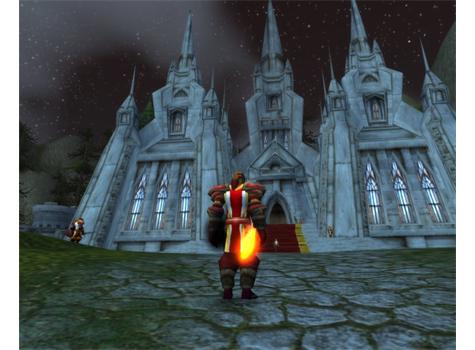 Now that he's gone, we can focus on the other one, right guys? ...guys?
Now let's say our little lonely warrior is out fighting a gnoll and another one runs past him to attack someone else. He is the same level as the gnolls, and his gear isn't the greatest (he is leveling, after all, and will soon replace it), and thus he can't take on two at once. Thus he lets it attack the other player, and if it comes back to attack him, he runs away. Put that warrior in an instance, and you have a tank who lets adds attack the mage and actually runs for the instance entrance when it all goes wrong, both of which are bad to do. (Note: I did both of these things when I first tanked Deadmines, so I am not making these things up.)
As for DPS, while leveling, more damage=faster kill=better chance of survival. While raiding, more damage=likely out-threat-ing the tank=death, or potential wipe. The leveling process teaches DPS nothing of threat, one of the most basic concepts necessary for a DPS to know for raids. Leveling creates a mindset that more damage is always good, and that moderation of damage is never necessary. Obviously, when raiding, the opposites of both facts are true, yet it seems that many a DPS that I have PUG'ed with have no concept of threat or damage moderation.
Healing is also a difficult concept for solo-ers to grasp. Put a priest who has always had to fend for himself in a group and he'll probably at the very least keep a shadow word: pain up on the boss. Leveling also requires strategies for survival that are not viable in groups. A solo-ing priest will use power word: shield a lot to protect them from damage and allow them to cast spells unimpeded. However, unless a priest is spec'ed deep Discipline and the tank is a high enough level (read: 80) that he doesn't need to depend on taking damage to generate rage/mana (if a paladin), then the shield will be a liability. Solo-ing also frowns upon overhealing, as it wastes mana, which means more downtime. In a group, overhealing is certainly not the ideal, but it's better than a dead tank.
Most importantly---and this can be applied to all players regardless of the roll they play in raids---solo-ing teaches a player to be self-reliant, and the habits of self-reliant players are often detrimental to the success of a raid, where everyone needs to work together. Now, when I refer to self-reliant behavior, I'm not talking about a shaman DPS healing damage he took from an AoE effect if the healer is busy healing the tank. I'm talking about a priest using psychic scream when he is attacked, a druid tank shifting out of bear form to heal himself, a mage using ice armor for its defensive capabilities rather than mage armor for more mana or molten armor for more DPS, a mana-using DPS going OOM because he was using his highest-damage abilities rather than his most mana-efficient ones, a frost mage going into an instance spec'ed for survival and not for damage and putting out sub-par DPS as a result, a hunter using distracting shot to "save" a tank because he does it when his pet is low on health and he can usually take the damage, or an elemental shaman using stoneskin totem in a raid rather than strength of earth totem because he has no use for strength or agility. All of these are mistakes I have seen players make, even in level 80 instances, where players should know better.
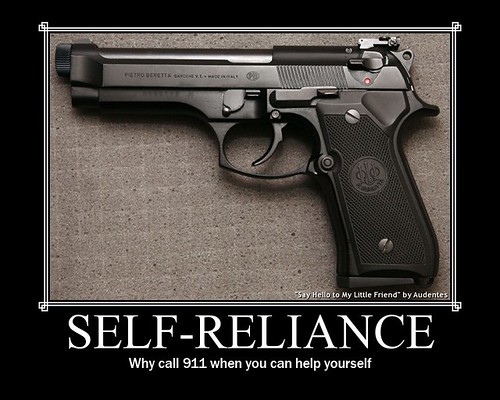 Just like in real life, methods you use to protect yourself in WoW are often counter-productive to the success of the group, impeding others from accomplish their goals. Oh yeah, I just combined WoW, philosophy, and political commentary with one picture and one caption. I'd like my medal now.
"But," you may say, "we all had to go through the leveling process, so why don't we all suck?" First of all, Dr. Dennis Leary would disagree with your assumption. Second of all, players learn the above-mentioned concepts not by leveling, but by doing low-level instances and/or group quests. That's how I learned about tanking, and it's how anyone who wants to learn the basics of grouping gets started. However, anyone who has already reached level 80 and is leveling a second character probably isn't going to want to run a low-level instance, so they won't get any experience with their new class in groups. And since they probably already understand the basics, why would they need to learn anything anyways?
"But," you say, "if someone has been a tank all the time they've been playing WoW, how can they learn another role?" I recently had this experience. For as long as I can remember, I was a tank on my druid. With the advent of dual-specs, I could finally become a healer, a role which I had always wanted to try out but never did for fear of losing my solo-viability. Having never healed an instance before, I read some online guides to druid healing, did the math to figure out my most mana efficient heals, familiarized myself with my new keyboard layout, and started in an instance I was already familiar with---Violet Hold. Not only did I heal really well, but I even got complimented on my healing, and I now heal raids in my guild frequently. Point is, though not all roles are created alike, learning a new role and learning it well has nothing to do with leveling.
"But," you should be saying now, "what about learning the nuances of your class? Put a level 50 shaman in the hands of someone who isn't familiar with the class and they will be overwhelmed." First of all, anyone who is lucky enough to receive a level 50 shaman should get on their knees and thank whichever god, gods, deity, or deities they worship for what they have received (unless they already have one, of course). I will admit, it would probably be overwhelming to learn a class from scratch at level 50. I think that if a "start a new character at 55" system where ever implemented, it would need to be like the Death Knight starting quests. It would grant players their talent points and abilities slowly, allowing players to become acclimated to their class at a comfortable pace. These quest-lines could also be class specific, allowing players to learn the intricacies of their class better. With the news the Cataclysm may completely change Azeroth, such a system may be possible. Imagine starting a new soldier of Stormwind/Orgimmar in a war-torn world where only a few fragments of the old conflicts remain. Since the various leaders need more troops fast, they could use these new recruits to clean up the mess left in Azeroth's old zones while using the experience to help them prepare for the coming battles. I think that quests like that would make for a good story. I'll post next Monday on ideas I have for how such a system could be implemented. (Edit: I never did this, for lack of ideas, and I apologize.) That is, unless Blizzard comes out and says the leaked Cataclysm details were hoaxed and MMO Champion was wrong.
 Would they lie to us? Well, maybe... You can't really blame them if Blizzard was using the alleged leak as a foiler to test the waters with player's reaction to radical changes.
Coming back to the main point, leveling does a lot of things, but the only thing it does really well is prevent a player from getting to the new content with a new character in a timely manor. Blizzard has already said that they think end-game is where it's at, so why they won't let players get on the fast track there is beyond me.
First of all, when many people refer to "learning one's class," they mean learning one's class for the purposes of raiding. In PvP situations, most people don't mind as much if they fight with someone who doesn't know their class, and most people are quite happy to fight against someone who doesn't know their class. In raiding, however, if someone doesn't know how to play their class, then everyone suffers. Thus, when I say "learning one's class," will from now on be referring to "being prepared for raids." This also applies for 5-man instances, which are meant to be a stepping stone between solo-ing and raids.
Now, the first thing one needs to know when preparing for raids is where he fits in. I am, of course, referring to the three key roles: tank, DPS, and healer. It is my opinion that the leveling process does not adequately prepare players for any of these roles. For example, when it comes to tanking, one concept frequently lost on new tanks is that tanks always need to hold the attention of the enemies, with rare exception. Let's imagine a warrior solo-ing his way to 80. Since has has only fought for himself, he has no concept of keeping a monster attacking him, even if he is low on health. He may be glad to see that monster run away once it gets low on health. That gives him an opportunity to bandage up or loot another guy he killed. If he has high health, then he will probably be just as glad to see that runner grab an extra guy; it means that the monster and the loot it drops will come to him, rather than him needing to run to it. Of course, everyone who has ever done an instance knows that this kind of attitude towards runners is a guaranteed way to cause a wipe. More adds means more damage means healer heals more means healer runs out of mana means everyone dies.
Now that he's gone, we can focus on the other one, right guys? ...guys?Now let's say our little lonely warrior is out fighting a gnoll and another one runs past him to attack someone else. He is the same level as the gnolls, and his gear isn't the greatest (he is leveling, after all, and will soon replace it), and thus he can't take on two at once. Thus he lets it attack the other player, and if it comes back to attack him, he runs away. Put that warrior in an instance, and you have a tank who lets adds attack the mage and actually runs for the instance entrance when it all goes wrong, both of which are bad to do. (Note: I did both of these things when I first tanked Deadmines, so I am not making these things up.)
As for DPS, while leveling, more damage=faster kill=better chance of survival. While raiding, more damage=likely out-threat-ing the tank=death, or potential wipe. The leveling process teaches DPS nothing of threat, one of the most basic concepts necessary for a DPS to know for raids. Leveling creates a mindset that more damage is always good, and that moderation of damage is never necessary. Obviously, when raiding, the opposites of both facts are true, yet it seems that many a DPS that I have PUG'ed with have no concept of threat or damage moderation.
Healing is also a difficult concept for solo-ers to grasp. Put a priest who has always had to fend for himself in a group and he'll probably at the very least keep a shadow word: pain up on the boss. Leveling also requires strategies for survival that are not viable in groups. A solo-ing priest will use power word: shield a lot to protect them from damage and allow them to cast spells unimpeded. However, unless a priest is spec'ed deep Discipline and the tank is a high enough level (read: 80) that he doesn't need to depend on taking damage to generate rage/mana (if a paladin), then the shield will be a liability. Solo-ing also frowns upon overhealing, as it wastes mana, which means more downtime. In a group, overhealing is certainly not the ideal, but it's better than a dead tank.
Most importantly---and this can be applied to all players regardless of the roll they play in raids---solo-ing teaches a player to be self-reliant, and the habits of self-reliant players are often detrimental to the success of a raid, where everyone needs to work together. Now, when I refer to self-reliant behavior, I'm not talking about a shaman DPS healing damage he took from an AoE effect if the healer is busy healing the tank. I'm talking about a priest using psychic scream when he is attacked, a druid tank shifting out of bear form to heal himself, a mage using ice armor for its defensive capabilities rather than mage armor for more mana or molten armor for more DPS, a mana-using DPS going OOM because he was using his highest-damage abilities rather than his most mana-efficient ones, a frost mage going into an instance spec'ed for survival and not for damage and putting out sub-par DPS as a result, a hunter using distracting shot to "save" a tank because he does it when his pet is low on health and he can usually take the damage, or an elemental shaman using stoneskin totem in a raid rather than strength of earth totem because he has no use for strength or agility. All of these are mistakes I have seen players make, even in level 80 instances, where players should know better.
Just like in real life, methods you use to protect yourself in WoW are often counter-productive to the success of the group, impeding others from accomplish their goals. Oh yeah, I just combined WoW, philosophy, and political commentary with one picture and one caption. I'd like my medal now."But," you may say, "we all had to go through the leveling process, so why don't we all suck?" First of all, Dr. Dennis Leary would disagree with your assumption. Second of all, players learn the above-mentioned concepts not by leveling, but by doing low-level instances and/or group quests. That's how I learned about tanking, and it's how anyone who wants to learn the basics of grouping gets started. However, anyone who has already reached level 80 and is leveling a second character probably isn't going to want to run a low-level instance, so they won't get any experience with their new class in groups. And since they probably already understand the basics, why would they need to learn anything anyways?
"But," you say, "if someone has been a tank all the time they've been playing WoW, how can they learn another role?" I recently had this experience. For as long as I can remember, I was a tank on my druid. With the advent of dual-specs, I could finally become a healer, a role which I had always wanted to try out but never did for fear of losing my solo-viability. Having never healed an instance before, I read some online guides to druid healing, did the math to figure out my most mana efficient heals, familiarized myself with my new keyboard layout, and started in an instance I was already familiar with---Violet Hold. Not only did I heal really well, but I even got complimented on my healing, and I now heal raids in my guild frequently. Point is, though not all roles are created alike, learning a new role and learning it well has nothing to do with leveling.
"But," you should be saying now, "what about learning the nuances of your class? Put a level 50 shaman in the hands of someone who isn't familiar with the class and they will be overwhelmed." First of all, anyone who is lucky enough to receive a level 50 shaman should get on their knees and thank whichever god, gods, deity, or deities they worship for what they have received (unless they already have one, of course). I will admit, it would probably be overwhelming to learn a class from scratch at level 50. I think that if a "start a new character at 55" system where ever implemented, it would need to be like the Death Knight starting quests. It would grant players their talent points and abilities slowly, allowing players to become acclimated to their class at a comfortable pace. These quest-lines could also be class specific, allowing players to learn the intricacies of their class better. With the news the Cataclysm may completely change Azeroth, such a system may be possible. Imagine starting a new soldier of Stormwind/Orgimmar in a war-torn world where only a few fragments of the old conflicts remain. Since the various leaders need more troops fast, they could use these new recruits to clean up the mess left in Azeroth's old zones while using the experience to help them prepare for the coming battles. I think that quests like that would make for a good story. I'll post next Monday on ideas I have for how such a system could be implemented. (Edit: I never did this, for lack of ideas, and I apologize.) That is, unless Blizzard comes out and says the leaked Cataclysm details were hoaxed and MMO Champion was wrong.
Would they lie to us? Well, maybe... You can't really blame them if Blizzard was using the alleged leak as a foiler to test the waters with player's reaction to radical changes. Coming back to the main point, leveling does a lot of things, but the only thing it does really well is prevent a player from getting to the new content with a new character in a timely manor. Blizzard has already said that they think end-game is where it's at, so why they won't let players get on the fast track there is beyond me.
Wednesday, August 19, 2009
How to most effectively level your crafting professions
I recently had the experience of power-leveling jewelcrafting twice; once with my shaman, and once with my death knight. It taught me a few lessons about power-leveling that I think can be applied to any profession you wish to power-level. Please note that the tips I provide here are based on the assumption that you are farming the materials yourself. If you wish to power-level your profession by buying stuff from the AH, then use these power-leveling guides. They are also really good for leveling your gathering professions, although you will sometimes need to do your own research on wowhead to see which zones are truly best for leveling your herbalism/mining based on the density of spawn points. Anyways, on to the guide.
The way I went about leveling jewelcrafting is that I looked for an area that was good for farming the general material I needed. For jewelcrafting/blacksmithing/engineering, this means farming copper/tin/iron etc. ore. For leatherworking, this would mean killing beasts to skin. For alchemy/inscription, this would mean farming herbs. Farming herbs for the specific purpose of leveling alchemy gets complicated, but if you are leveling herbalism along with alchemy, just use the herbs you obtain. A good farming area should have spawn points that are really close to each other or create a path you can follow for maximum yield. It's also a good idea to look for an area big enough that you won't need to wait for your mining nodes/beasts/herbs to respawn. An example of an ideal area is Mulgore for mining copper. The route is a simple circle, and the zone is big enough that you shouldn't have a problem with respawns.
Just a few extra notes. Mining nodes will only appear on rocky slopes. This usually means the edges of zones and any mountains, and also means you won't find many in flat zones. Some herbs will only appear on a flat area, while others only appear next to trees, and some only appear on rocky slopes. Respectively, those herbs tend to look like flowers, leaves, or roots.
Once I had a plethora of materials, I went back to my profession trainer and used my materials to make stuff next to them. Every time I increased my skill by five, I checked to see if a new recipe was available for training. The key to this method is how you use the materials at your disposal to level your profession of choice. It's good to create a priority list for which recipes and which materials you will use first. The idea is to use your materials as efficiently as possible while using as many as possible. Materials become less useful as you level a profession, so you will want to use your materials in such a way that none go to waste. For example, in leatherworking, there is a recipe that allows you to turn ruined leather scraps into light leather. There is also a recipe that allows you to turn light leather in light armor kits. Both are very efficient ways of leveling leatherworking when you are at a skill level of one. Also, the first recipe is the only one that uses leather scraps. So, suppose you have a bunch of light leather and a bunch of ruined leather scraps. If you use the scraps first, you can still use your light leather for more advanced recipies later on, allowing you to get some skill ups out of both materials. If you make the armor kits first, however, and skill up that way, you will have lost the opportunity to use the scraps for skill-ups. Thus you will not have leveled as efficiently as you could have.
As should be clear now, efficiency is not only about using as few materials as possible in each recipe, but it is also about getting as many skill-ups as you can out of your pool of materials. Thus it is important to make a priority order of which materials you will use when. Some professions may not allow for that kind of flexibility, but just do what you can. Here's my priority order for power-leveling professions.
1. Recipes that use materials that don't have any other use
These include the recipe I mentioned above by which scraps can be turned into light leather. I also encountered a similar situation while leveling jewelcrafting. While farming ore for jewelcrafting, I got a lot of stones that had no use other than making statues. Thus I used the stones first and crafted as many statues and I could before moving on the using the ore. That way I used less ore to level jewelcrafting than I would have if I used the ore first, and the stones did not go to waste.
2. Recipes that make items you will use in later recipes
The professions are full of these. Alchemy has you making oils out of fish, blacksmithing has you making grinding stones that are used in other recipes, engineering has a plethora of such parts, as does jewelcrafting, and leatherworking allows you to combine pieces of leather to crate the next teir of leather. Be careful that you don't make too many of these parts, however. Some recipes require both the parts you make and the materials you make them from, such as the engineering recipe for a rough copper bomb. This recipe requires both a copper bar and a handful of copper bolts, which are made from copper bars. Thus, if you used all of your copper to make bolts, you'll be out of luck. A good guideline is to try not to have more of the crafted material than the original material. If you have, say, 40 copper bars, you wouldn't want to make more than 20 bolts. This would leave you with 20 of each. If you use them all and end up needing more bolts while needing the bars less than you thought you would, you'll be able to make more. If you end up not needing that many bolts, you'll still have gotten the skill-ups with wasting too many of the bars. You should also just look ahead to see whether or not you will use a certain part. Still, making parts is often the most efficient way to level a profession, so don't worry too much about going overboard.
Once you have gone through these two options, you'll want to use the recipes that use the fewest materials. It's important to also look to see what your trainer will be able to teach you in the future so you can plan which recipes you use. For example, let's say you are leveling jewelcrafting. If you have some shadowgems and some malachite, you'll want to use the recipes that use the malachite first. Why? Because shadowgems are used in higher-level recipes than malachite, so they stay useful for longer. You won't encounter too many situations like this, you should keep an eye out for them.
Aside form that, just use the recipes that use the fewest materials possible. Also, it's worth mentioning that if you are a higher level than you would normally be if you were leveling your profession while leveling in general, recipes that are yellow will almost always give you skill-ups. If you have a skill level of 50 at level 60, yellow recipes will probably give you a skill up. If you have a skill level of 50 at level 10, this probably will not be the case. Thus, don't be afraid to use a recipe that is yellow if it uses less materials than an orange recipe (as it probably will) out of fear of not getting a skill up.
The way I went about leveling jewelcrafting is that I looked for an area that was good for farming the general material I needed. For jewelcrafting/blacksmithing/engineering, this means farming copper/tin/iron etc. ore. For leatherworking, this would mean killing beasts to skin. For alchemy/inscription, this would mean farming herbs. Farming herbs for the specific purpose of leveling alchemy gets complicated, but if you are leveling herbalism along with alchemy, just use the herbs you obtain. A good farming area should have spawn points that are really close to each other or create a path you can follow for maximum yield. It's also a good idea to look for an area big enough that you won't need to wait for your mining nodes/beasts/herbs to respawn. An example of an ideal area is Mulgore for mining copper. The route is a simple circle, and the zone is big enough that you shouldn't have a problem with respawns.
Just a few extra notes. Mining nodes will only appear on rocky slopes. This usually means the edges of zones and any mountains, and also means you won't find many in flat zones. Some herbs will only appear on a flat area, while others only appear next to trees, and some only appear on rocky slopes. Respectively, those herbs tend to look like flowers, leaves, or roots.
Once I had a plethora of materials, I went back to my profession trainer and used my materials to make stuff next to them. Every time I increased my skill by five, I checked to see if a new recipe was available for training. The key to this method is how you use the materials at your disposal to level your profession of choice. It's good to create a priority list for which recipes and which materials you will use first. The idea is to use your materials as efficiently as possible while using as many as possible. Materials become less useful as you level a profession, so you will want to use your materials in such a way that none go to waste. For example, in leatherworking, there is a recipe that allows you to turn ruined leather scraps into light leather. There is also a recipe that allows you to turn light leather in light armor kits. Both are very efficient ways of leveling leatherworking when you are at a skill level of one. Also, the first recipe is the only one that uses leather scraps. So, suppose you have a bunch of light leather and a bunch of ruined leather scraps. If you use the scraps first, you can still use your light leather for more advanced recipies later on, allowing you to get some skill ups out of both materials. If you make the armor kits first, however, and skill up that way, you will have lost the opportunity to use the scraps for skill-ups. Thus you will not have leveled as efficiently as you could have.
As should be clear now, efficiency is not only about using as few materials as possible in each recipe, but it is also about getting as many skill-ups as you can out of your pool of materials. Thus it is important to make a priority order of which materials you will use when. Some professions may not allow for that kind of flexibility, but just do what you can. Here's my priority order for power-leveling professions.
1. Recipes that use materials that don't have any other use
These include the recipe I mentioned above by which scraps can be turned into light leather. I also encountered a similar situation while leveling jewelcrafting. While farming ore for jewelcrafting, I got a lot of stones that had no use other than making statues. Thus I used the stones first and crafted as many statues and I could before moving on the using the ore. That way I used less ore to level jewelcrafting than I would have if I used the ore first, and the stones did not go to waste.
2. Recipes that make items you will use in later recipes
The professions are full of these. Alchemy has you making oils out of fish, blacksmithing has you making grinding stones that are used in other recipes, engineering has a plethora of such parts, as does jewelcrafting, and leatherworking allows you to combine pieces of leather to crate the next teir of leather. Be careful that you don't make too many of these parts, however. Some recipes require both the parts you make and the materials you make them from, such as the engineering recipe for a rough copper bomb. This recipe requires both a copper bar and a handful of copper bolts, which are made from copper bars. Thus, if you used all of your copper to make bolts, you'll be out of luck. A good guideline is to try not to have more of the crafted material than the original material. If you have, say, 40 copper bars, you wouldn't want to make more than 20 bolts. This would leave you with 20 of each. If you use them all and end up needing more bolts while needing the bars less than you thought you would, you'll be able to make more. If you end up not needing that many bolts, you'll still have gotten the skill-ups with wasting too many of the bars. You should also just look ahead to see whether or not you will use a certain part. Still, making parts is often the most efficient way to level a profession, so don't worry too much about going overboard.
Once you have gone through these two options, you'll want to use the recipes that use the fewest materials. It's important to also look to see what your trainer will be able to teach you in the future so you can plan which recipes you use. For example, let's say you are leveling jewelcrafting. If you have some shadowgems and some malachite, you'll want to use the recipes that use the malachite first. Why? Because shadowgems are used in higher-level recipes than malachite, so they stay useful for longer. You won't encounter too many situations like this, you should keep an eye out for them.
Aside form that, just use the recipes that use the fewest materials possible. Also, it's worth mentioning that if you are a higher level than you would normally be if you were leveling your profession while leveling in general, recipes that are yellow will almost always give you skill-ups. If you have a skill level of 50 at level 60, yellow recipes will probably give you a skill up. If you have a skill level of 50 at level 10, this probably will not be the case. Thus, don't be afraid to use a recipe that is yellow if it uses less materials than an orange recipe (as it probably will) out of fear of not getting a skill up.
Subscribe to:
Posts (Atom)


